
BMI Calculator for Men – Check Your Healthy Weight in Seconds
If you want a simple, reliable way to check whether your weight is in a healthy range, a BMI calculator for men is one of the best places to start. BMI stands for Body Mass Index. It is a number calculated from your height and weight, and it gives you a quick snapshot of where your body weight falls relative to what is considered healthy for your size.
For men, maintaining a healthy BMI matters more than most people realize. Carrying too much weight raises the risk of heart disease, type 2 diabetes, high blood pressure, and joint problems. Being too light can also signal nutritional deficiencies or muscle loss. Knowing your number puts you in control.
The healthy BMI range for men sits between 18.5 and 24.9. Anything below 18.5 is underweight, 25 to 29.9 is overweight, and 30 or above falls into the obese category. These thresholds apply to most adult men, though factors like age, muscle mass, and ethnicity can shift the picture.
This guide includes a free male BMI calculator, a detailed men BMI chart, age-specific advice, and practical tips so you can act on your results. Scroll down to use the calculator right now.
What is a healthy BMI for men?
A healthy BMI for men is between 18.5 and 24.9. Below 18.5 is underweight, 25 to 29.9 is overweight, and 30 or above is obese. The ideal BMI range for most adult men is between 21 and 23.
Free BMI Calculator for Men
Enter your details below. The calculator works in both metric and imperial units and gives you your BMI score, weight category, and a personalised health message instantly.
BMI Calculator Men
Metric & Imperial | Instant Results
How BMI Is Calculated for Men
BMI uses a straightforward formula. It divides your weight by your height squared. The result tells you how much mass you carry relative to how tall you are.
Metric Formula
Example: A man who weighs 82 kg and stands 1.80 m tall has a BMI of 82 ÷ (1.80 × 1.80) = 82 ÷ 3.24 = 25.3 (slightly overweight).
Imperial Formula
Example: A man weighing 180 lbs at 5 feet 11 inches (71 inches) has a BMI of (180 × 703) ÷ (71 × 71) = 126,540 ÷ 5,041 = 25.1.
| BMI Range | Category | Health Risk |
|---|---|---|
| Below 18.5 | Underweight | Low BMI – possible nutrient deficiency or muscle loss |
| 18.5 – 24.9 | Normal / Healthy | Optimal range – lowest health risk for most men |
| 25.0 – 29.9 | Overweight | Moderately increased – risk rises with waist size |
| 30.0 – 34.9 | Obese Class I | High – significantly elevated risk of chronic disease |
| 35.0 – 39.9 | Obese Class II | Very high – serious metabolic complications likely |
| 40.0 + | Obese Class III | Extremely high – requires immediate medical attention |
Men BMI Chart – Weight Ranges by Height
The BMI chart for men below shows healthy, overweight, and obese weight thresholds at common heights.
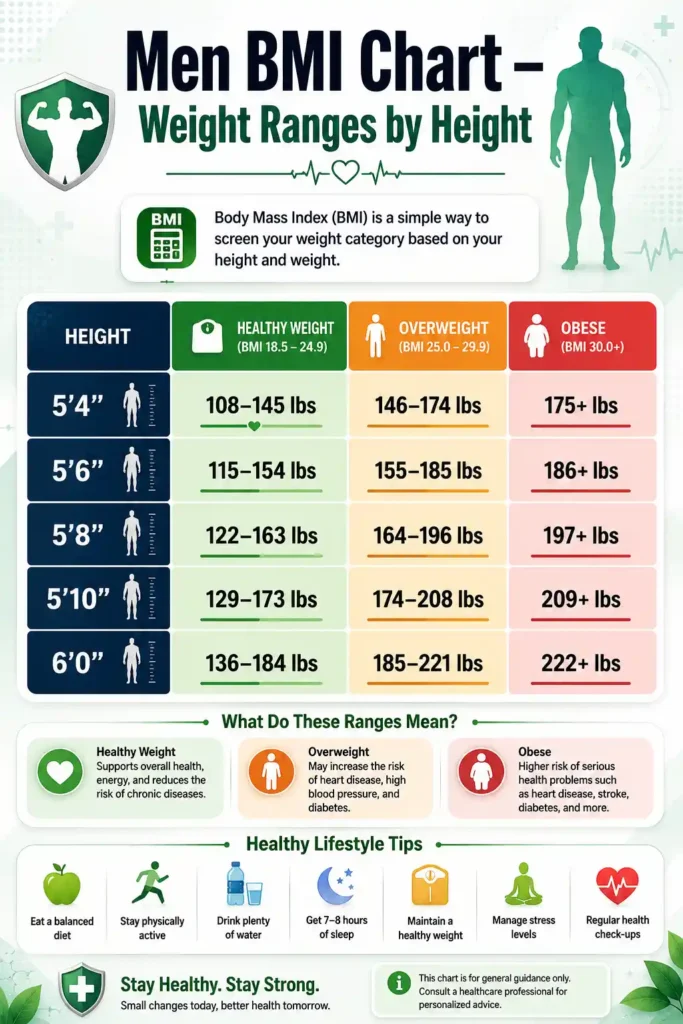
If your weight falls in the healthy column for your height, you are in good shape. If you sit in the overweight or obese columns, tools like the Weight Loss Calculator and Daily Calorie Intake guides can help you build a realistic plan.
Ideal BMI for Men Over 40
The ideal BMI for men over 40 shifts slightly compared to younger adults. After 40, your metabolism slows, testosterone levels begin to decline, and muscle mass starts to decrease gradually. This means your body composition changes even if the number on the scale stays the same.
Many doctors suggest that men over 40 aim for a BMI in the 22 to 27 range rather than insisting on staying under 25. A modest buffer accounts for the natural reduction in lean muscle and slight increases in body fat that happen with age. That said, waist circumference matters too. A waist over 40 inches (102 cm) signals increased cardiovascular risk regardless of BMI.
Age 40 – 49
22 – 26
Testosterone starts dipping. Abdominal fat becomes easier to gain. Keep BMI below 27 and prioritise strength training to preserve muscle.
Age 50 – 59
22 – 27
Metabolism slows further. Bone density becomes a concern. A slightly higher BMI can actually be protective, but belly fat still raises cardiac risk.
Age 60 and Over
23 – 28
Research shows that in older men, a BMI slightly above 25 is linked to better outcomes. Being underweight at this stage is more dangerous than being slightly overweight.
Why Muscle Loss Matters After 40
Men lose roughly 3 to 8 percent of muscle mass per decade after their 30s. Since muscle weighs more than fat, a lower BMI in an older man can actually mask a high body fat percentage. The Body Fat Calculator gives a more complete picture alongside BMI.
The key takeaway for the ideal BMI for men over 40 is this: do not obsess over a single number. Use BMI as one data point among several, including waist size, blood pressure, blood sugar, and overall energy levels.
Healthy BMI for Men by Age Group
BMI is not one-size-fits-all. Age plays a genuine role in what numbers mean for your health. Here is a breakdown of target ranges that most men should aim for at different life stages.
| Age Group | Target BMI Range (Men) | Key Focus |
|---|---|---|
| 20s | 18.5 – 24.9 | Build lean muscle, establish healthy habits |
| 30s | 19 – 25 | Metabolism begins slowing; watch calorie balance |
| 40s | 22 – 26 | Preserve muscle mass, manage abdominal fat |
| 50s | 22 – 27 | Bone health, cardiovascular risk management |
| 60+ | 23 – 28 | Avoid underweight; prioritise functional fitness |
Men in Their 20s
Your 20s are the easiest time to reach and hold a healthy BMI. Your metabolism runs at its peak, and your body responds well to exercise. A BMI of 18.5 to 24.9 is the target, and building muscle during this decade pays dividends for decades.
Men in Their 30s
Life tends to get busier in your 30s. Work, family, and less physical activity can cause gradual weight creep. The standard healthy range still applies, but paying attention to the Daily Calorie Intake becomes increasingly important.
Men in Their 40s
This is where BMI interpretation needs more nuance. Hormonal shifts and muscle loss mean a BMI of 22 to 26 is often more realistic and healthy than trying to stay in the low 20s. Read the section above on the ideal BMI for men over 40 for more detail.
Men in Their 50s and Beyond
A slightly higher BMI often correlates with better health outcomes in older men. Sarcopenia (muscle wasting) is a bigger threat than moderate overweight at this stage. Focus on resistance training and protein intake rather than purely chasing a lower BMI number.
For comparison, studies on the healthy BMI for women by age show similar age-adjusted increases, though the thresholds differ slightly due to differences in muscle mass and fat distribution between sexes.
Body Fat Percentage vs BMI – Which Matters More?
BMI is useful, but it does not measure body fat directly. It only uses height and weight. That means it cannot tell the difference between a muscular man and a man carrying excess fat at the same body weight.
Limitations of BMI
- It does not distinguish muscle from fat.
- It does not account for where fat is stored (belly fat is far more dangerous than hip fat).
- It may underestimate health risk in men who are "skinny fat" – normal BMI but high body fat.
- It may overestimate risk in very muscular men who are actually lean and healthy.
Why Athletes Often Have a High BMI
A rugby player or powerlifter may have a BMI of 28 or 29 and be in excellent health. Their weight comes from dense muscle tissue, not fat. For these men, the Body Fat Calculator or a DEXA scan gives a far more accurate picture of health status.
Healthy Body Fat Ranges for Men
Athletes: 6–13%
Fitness level: 14–17%
Acceptable: 18–24%
Obese: 25%+
Use BMI as a starting point, then pair it with the Waist to Height Ratio and Body Fat Calculator for a more complete picture of your metabolic health.
Why Men Use a BMI Calculator
A male BMI calculator gives you an objective number to work with. Here are the main reasons men find it valuable:
- Weight management: It shows clearly whether you need to lose, gain, or maintain your current weight.
- Fitness tracking: Tracking BMI over time reveals whether your training is moving you in the right direction.
- Health awareness: Many men avoid the doctor for years. A quick BMI check at home can trigger action before problems escalate.
- Fat loss goals: Knowing your starting BMI helps you set specific, measurable targets for a fat loss programme.
- Insurance and medical screening: Many health forms and pre-employment screenings request BMI data.
- Motivation: Seeing a number change downward as you make healthier choices keeps many men motivated.
- Simplicity: You only need height and weight. No lab tests, no equipment.
Factors That Affect BMI in Men
Your BMI does not exist in isolation. Several factors push it up or pull it down, and understanding them helps you interpret your number correctly.
Muscle Mass
Muscle is denser and heavier than fat. Men who lift weights regularly or play sports may register a higher BMI than their actual fat levels suggest. If your BMI is above 25 but your waist is trim and your body fat is low, you are probably fine.
Age
As men age, muscle mass decreases and body fat tends to increase even at the same body weight. This is why age-adjusted BMI targets exist. A 60-year-old man with a BMI of 27 is in a different situation than a 25-year-old with the same number.
Hormones
Testosterone plays a major role in body composition. Lower testosterone – which occurs naturally with age or due to medical conditions – leads to more fat storage and less muscle. Men with low testosterone may have a misleadingly normal BMI that hides a high body fat percentage.
Lifestyle and Diet
Sedentary jobs, high-calorie diets, irregular sleep, and chronic stress all contribute to weight gain. Conversely, men who eat well, move regularly, and sleep enough find it much easier to maintain a healthy BMI. The Healthy Diet Plan and Protein Intake Calculator can help you fine-tune your nutrition.
Genetics
Some men are genetically predisposed to carry more abdominal fat or to have a slower metabolism. Genetics set a baseline, but lifestyle choices largely determine where you land within that genetic range.
Ethnicity
Research shows that men of South Asian, East Asian, and some Middle Eastern backgrounds may face higher health risks at lower BMI values. Some health guidelines recommend lower thresholds for these groups, such as 23 instead of 25 for the overweight category.
How Men Can Maintain a Healthy BMI
Reaching a healthy BMI is one thing. Keeping it there long term is where most men struggle. These practical steps make it manageable without extreme measures.
- Eat whole foods most of the time. Focus on lean protein, vegetables, whole grains, and healthy fats. Processed foods are the biggest driver of excess weight in men. Your Daily Calorie Intake is easier to manage when most of your food is minimally processed.
- Strength train at least twice a week. Resistance exercise preserves and builds muscle, boosts metabolism, and improves insulin sensitivity. As you age, this becomes non-negotiable for keeping your BMI in a healthy range.
- Walk more than you think you need to. Ten thousand steps a day sounds cliché, but consistent daily movement adds up to hundreds of extra calories burned each week without any effort at the gym.
- Sleep 7 to 9 hours each night. Poor sleep disrupts hunger hormones – specifically ghrelin and leptin – making you hungrier and less satisfied by food. Men who sleep less than 6 hours consistently tend to gain more weight over time.
- Drink water before meals. Staying well hydrated supports your metabolism and reduces the likelihood of confusing thirst with hunger. Aim for at least 2.5 liters of water daily, more if you exercise.
- Track your calories occasionally. You do not need to count every day, but even two or three weeks of tracking with a food diary reveals patterns. The Calorie Calculator helps you find your daily maintenance number.
- Manage stress actively. Chronic stress elevates cortisol, which promotes abdominal fat storage in men. Exercise, adequate sleep, mindfulness, and social connection all help keep cortisol in check.
- Use the BMI Calculator and BMR Calculator regularly. Check your BMI every one to three months. Catching a slow upward creep early is far easier than reversing significant weight gain.
Related Health Tools for Men
BMI gives you a starting point, but the full picture of your health comes from multiple measurements used together. Here are the most useful complementary tools:
- Use the Calorie Calculator to find out exactly how many calories your body needs each day.
- The Body Fat Calculator tells you your actual fat percentage, which BMI alone cannot show.
- Try the Ideal Weight Calculator to see the weight range that suits your height and build.
- The BMR Calculator shows your basal metabolic rate – the number of calories you burn at rest.
- Check your Waist to Height Ratio for an accurate predictor of cardiovascular and metabolic risk.
- The Weight Loss Calculator creates a realistic timeline for reaching your goal weight.
- Use the Protein Intake Calculator to make sure you are eating enough protein to support muscle maintenance.
- The Daily Calorie Intake guide walks you through creating a sustainable calorie target without crash dieting.
- Browse Fitness Tips for Men for actionable workout and lifestyle advice by age group.
- Follow a structured Healthy Diet Plan to support fat loss or muscle gain without confusion.
Frequently Asked Questions
What is a healthy BMI for men?
A healthy BMI for men is between 18.5 and 24.9. Most men do best with a BMI between 21 and 23. Below 18.5 is underweight, 25 to 29.9 is overweight, and 30 or higher is classified as obese.
What is the ideal BMI for men over 40?
For men over 40, a BMI of 22 to 27 is generally considered healthy. Age-related muscle loss and hormonal changes mean that a slightly higher BMI is often normal and not a cause for concern, as long as waist circumference stays below 40 inches (102 cm).
Does BMI work for muscular men?
Not perfectly. BMI cannot distinguish muscle from fat. A muscular man may have a BMI above 25 and still have very low body fat. Athletes and bodybuilders should pair BMI with a body fat percentage measurement for a more accurate assessment.
How accurate is BMI?
BMI is a useful screening tool but not a diagnostic test. It is reasonably accurate for average-build adults but less so for athletes, the elderly, and certain ethnic groups. It is best used alongside other measures like waist circumference and body fat percentage.
What BMI is considered overweight for men?
A BMI of 25.0 to 29.9 is classified as overweight for men. At this level, the risk of type 2 diabetes, heart disease, and high blood pressure begins to increase. Losing even 5 to 10 percent of body weight can significantly lower those risks.
Can athletes have a high BMI?
Yes, absolutely. Athletes like rugby players, sprinters, and powerlifters often have BMIs above 25 or even 30 due to high muscle mass. This does not mean they are at risk. Their actual body fat percentage is typically low, which is what matters most for health.
What is the best BMI range for men?
The sweet spot for most adult men under 40 is a BMI between 21 and 23. This range is associated with the lowest risk of chronic disease, good energy levels, and healthy cardiovascular markers. Men over 40 may be healthy at up to 27 depending on body composition.
How often should men check their BMI?
Checking your BMI every one to three months is a reasonable habit. More frequent checks can feel obsessive without adding useful information. Monthly tracking works well if you are actively trying to lose or gain weight.
What is a dangerous BMI for men?
A BMI below 16 or above 40 is considered dangerous and requires medical attention. A BMI below 16 suggests severe undernutrition. A BMI above 40 (Class III obesity) significantly raises the risk of heart disease, stroke, diabetes, and certain cancers.
Does age affect BMI in men?
Yes. As men age, muscle mass decreases and body fat increases even if weight stays the same. A BMI that was healthy at 30 may have different implications at 55. Health experts often advise slightly higher BMI targets for men over 40 to account for these changes.
Can BMI predict health risks?
BMI is a reasonable predictor of risk at a population level but is not precise for individuals. High BMI is associated with greater risk of heart disease, diabetes, sleep apnoea, and joint problems. However, a high BMI in an athletic man may carry very different risks than in a sedentary man.
Should older men have a higher BMI?
Some research suggests that a BMI of 25 to 27 in men over 65 may actually be associated with better health outcomes and longevity compared to lower values. Being underweight is a serious concern in older men, as it often signals muscle wasting and nutritional deficiencies.
Final Thoughts
Understanding your BMI is one of the smartest first steps you can take toward better health. The free BMI calculator for men at the top of this page gives you your number in seconds. What matters most is what you do with it.
If your BMI is in the healthy range, keep doing what you are doing. Use the tools available – strength training, balanced nutrition, good sleep – to stay there as you age. If your BMI is above or below the healthy range, that is not a verdict. It is a starting point for action.
Small, consistent changes produce real results. Replacing one bad meal a day, adding two weight sessions per week, sleeping an extra hour – these steps compound over months into meaningful changes in both your BMI and your long-term health.
Come back and use the male BMI calculator every month or two. Tracking your progress keeps you honest and motivated. Pair it with the Body Fat Calculator, BMR Calculator, and Waist to Height Ratio for a complete picture of where you stand.
Your health is worth the two minutes it takes to check.
Medical Disclaimer
This calculator and all content on this page are for informational purposes only and do not replace professional medical advice, diagnosis, or treatment. Always speak with a qualified healthcare provider before making changes to your diet, exercise routine, or health management plan.